
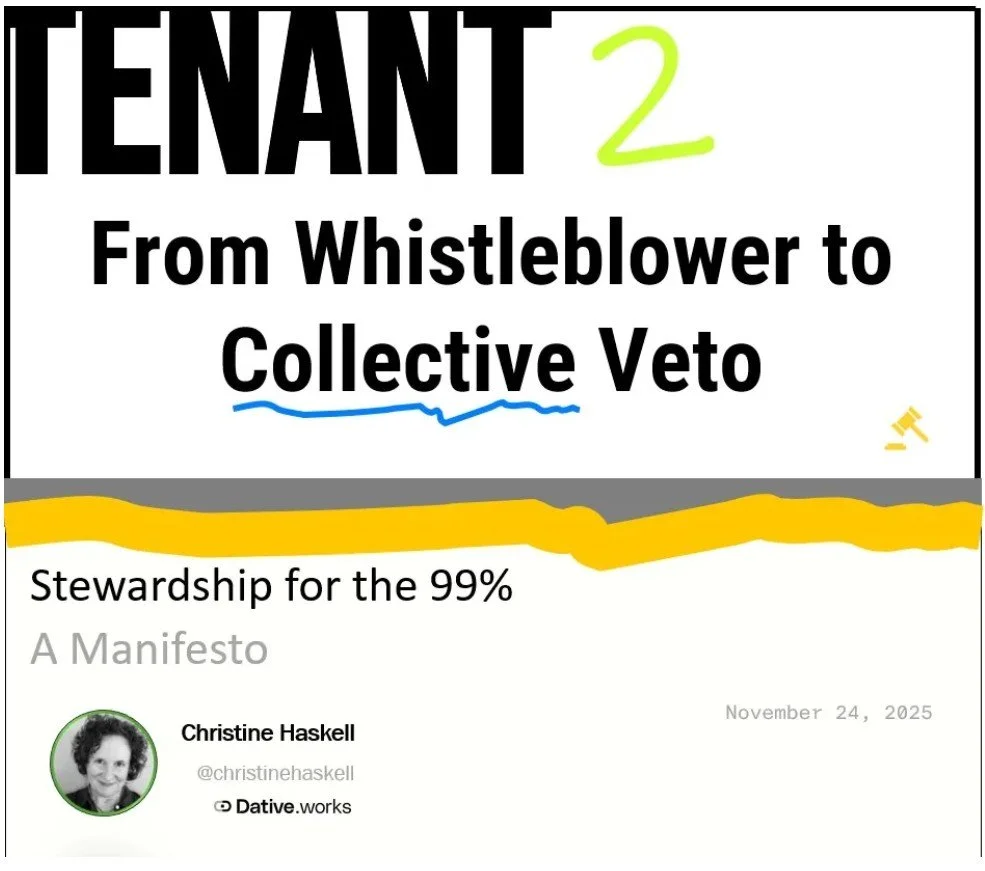
Rerouting the Power of Stewardship
After years of solitary warnings, the center of gravity has shifted from whistleblowing to organized constraint. Since 2018, the recent stewardship strikes have moved from the U.S. global tech hubs and European labor venues. Google employees’ revolt against Project Maven marked a pivot from ethics as branding to ethics as veto; the global walkout the same year demonstrated that action could move policy. By 2020, internal protests over the treatment of AI ethics researchers made the stakes explicit. In 2023, Hollywood turned talk into contract, codifying consent and compensation for AI use.
Meanwhile, European courts and parliaments pressed algorithmic management into law, from Italy’s rulings to Spain’s Riders Law and Dutch and UK driver cases, while news organizations advanced provenance standards so evidence would not collapse under synthetic “certainty.” Across this period, hashtags became powerful rallying points: #GlobalWalkOut, #GoogleWalkOut, #IStandWithTimnit, , #NoTechForICE, #TechWontBuildIt, #WGAStrike, #UnionStrong, #EthicalAI. What began as a ripple is now a tide—a stewardship movement with the potential to disrupt old alliances and redraw parts of capitalism’s map.
Taken together, these actions sketch the first durable pattern of collective stewardship for the 99-percent limits that take a definitive bite across sectors. These are no longer slogans varnishing sell-out optimism or sanding the ’60s smooth. They’re a return to first principles; restoring nerve and clarity with uncoached conviction, the kind that gave us seat belts, motorcycle helmets, and protective suits in nuclear facilities.
This manifesto suggests that nationally rooted actions (Google Walkout, Stop Killer Robots, Writers’ and Actors’ AI clauses) and international observances (Data Protection Day, Safer Internet Day) already set precedents for synchronized, cross-border mobilization. The next move is coordination: a Global Stewardship Month, where institutions publish AI resource ledgers, appeal and reversal rates, and no-go criteria, making jurisdiction (not slogans) the measure of progress. The spirit echoes early twentieth-century working-class mobilizations led by marginalized workers: in the U.S., the 1909 “Uprising of the 20,000” and the 1912 Bread and Roses strike; abroad, the adoption of May Day as an international day of labor action and the socialist women’s congresses that seeded International Women’s Day.
Re-animating that spirit, today’s stewardship strikes reclaim roots in worker struggle and social justice. They unite data professionals and anyone protecting their data across oceans and borders, and across quieter barriers: NDAs, non-competes, export controls, paywalls, content filters, app-store gatekeeping, and algorithmic silos. “Solidarity is our weapon” gains force when isolation (geographic, legal, and technical) is broken by design. These actions reveal stewardship’s political power: not only scaling symbolic walls, but cutting through the fragmentation that fractures daily life. When stewards halt extraction long enough to demand contestability, provenance, and human-paced deployment, they show what the 99 percent can do.
That is not all. The strike itself is changing. Walkouts now pair with march lines, demonstrations, small-business closures, blockades, and data boycotts—a repertoire thinned by decades of reform, restored by use. The scope of “labor” widens, too. People withhold not only hours, but data, attention, and tacit consent—the shadow work that keeps automated systems learning: clicks, corrections, prompts, ratings, and unpaid moderation. Naming that invisible work makes it visible, alongside care and community maintenance, the economy treats as background. Paid work widens as well: code becomes the manager; surveillance and coerced PII trail workers' homes; discipline arrives without appeal. Harassment, retaliatory NDAs, limits on reproductive care, and curbs on organizing sit with wages and hours, part of the same fight.
The new wave dissolves the tired split between “identity politics” and “class politics.” It shows how work and private life have fused—how attention, emotion, and data are harvested at home and on the job—so the fight can’t be parked in HR or pushed to the street. With coerced PII “consent” and ambient monitoring, the home has become a regulated workspace; work-from-home has become work-at-home. It also widens who counts as a worker: not only engineers and warehouse crews, but ghost-labelers, moderators, adjuncts, clinicians on AIOps dashboards, and the public whose behavioral exhaust trains the models. In that light, stewardship names a next phase of class struggle that is at once internationalist, feminist, environmentalist, and anti-racist. Contestability, chain of custody, and resource budgets are not abstractions. They are how dignity is defended where extraction now flows, through our bodies, our time, our neighborhoods, and our feeds.
Stewardship strikes arrive just as traditional union power is thinned by fissured workplaces, global supply chains, “gig” contracts, and the spread of algorithmic management from factories into offices, hospitals, and schools. To keep the conflict visible, organizers have shifted to the fight to where AI now governs daily life: the rules of pace and oversight at work; the standards of evidence in newsrooms, courts, and clinics; and the resource ledgers that tie deployments to power and water. Remote work blurred home and job; return-to-office re-tethered benefits to employers; data centers and logistics builds now compete with towns for power, water, loans, and land. The locus of struggle has moved into jurisdiction—over pace, over what counts as evidence, and over who bears the costs—so that engineered affect and synthetic fluency don’t outrun proof. Today’s stewardship sits here: teachers defending attention, critical reasoning, and the development of domain expertise; newsroom coalitions adopting provenance; drivers and riders winning transparency and appeal rights; clinicians demanding “not yet” until safety clears. The through-line isn’t a theory reproduction—it’s jurisdiction: who sets the terms, who can halt them, what counts as proof, and who pays when we’re wrong.
In the UK, Spain, Italy, and now Germany, South Korea, Brazil, and Kenya, steward actions have drawn broad coalitions against austerity and unaccountable automation. Not only marginalized information workers but warehouse crews, riders and drivers, newsroom staff, clinicians, and yes, plenty of male allies, have joined mass demonstrations against the defunding of schools, health care, housing, transport, and environmental protections. From Riders Law fights in Spain, France, and Italy to Dutch and UK driver cases, from German works councils pressing limits on monitoring to South Korean delivery unions winning safety concessions, from Brazil’s Breque dos Apps to Kenyan content moderators forcing platform accountability, the pattern holds: push back on finance-driven “efficiency,” defend public goods, demand appeal rights and transparency.
All told, this wave is rediscovering the “impossible,” asking for bread and roses (and autonomy). Bread: restored wages and public funding stripped by decades of neoliberalism. Roses: the human texture of work/time, attention, craft—kept intact. Autonomy: the right to refuse automated orders, to appeal machine-made decisions, to slow deployment when stakes touch pay, safety, identity, or due process. Progress isn’t whatever scales. It’s whatever remains answerable to the people it scores, surveils, and sometimes harms.
Not everyone can walk out of their jobs. Saying “no” to a boss, or to a Zuckerberg, is no small thing. But stewardship isn’t always an exit; it’s tempo and terms: make the “yes” earn itself, demand evidence, and name accountability before harm. That quiet stance is still jurisdiction—an intentional, practiced not yet.
Explore the Manifesto Series
Tenant 3: Stewardship is theater. Own it, and make theater accountable.
Tenant 4: coming soon!
New tenants are published weekly (or thereabouts) and published on LinkedIn and SubStack for updates.
Hi, I’m Christine. 👋
In a world awash in buzzwords and borrowed courage, Dative.works is a pocket of resistance—where data pros, skeptics, and stray idealists come to build something less disposable.
If you’d rather ask better questions than echo easy answers, pull up a chair. The work starts here.