
When Religious Conversion Becomes a Signal
JD Vance is part of a small group.
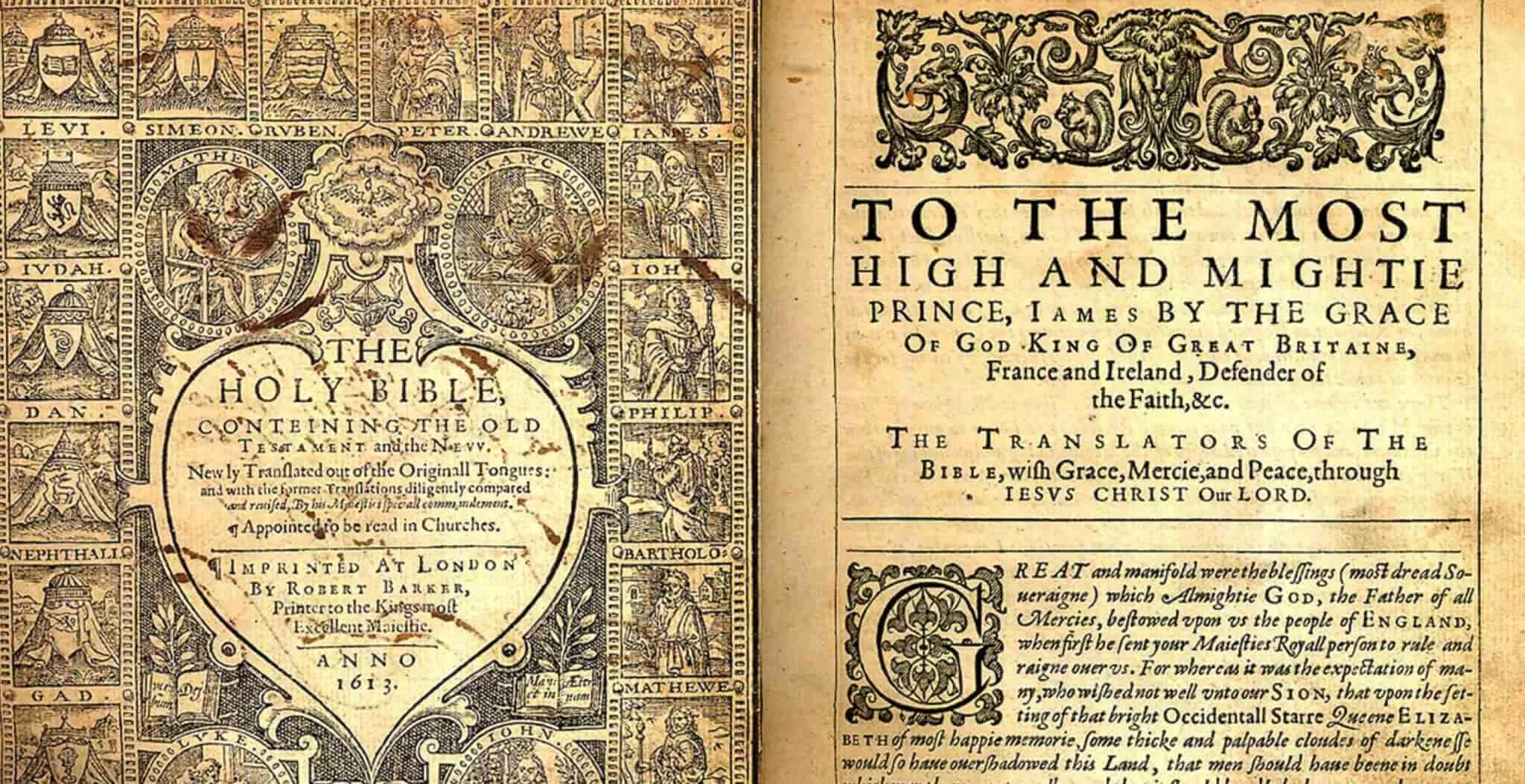
IMG CREDIT: Original King James Version Dedicatory Page. The King James Bible has long been celebrated as one of the most significant texts of all time, not only for its accessible portrayal of Christianity, but also for its role in spreading the English language worldwide.
According to Pew Research Center, converts to Catholicism account for just 1.5% of all U.S. adults. That translates to roughly 4 million people. Within American Catholicism, converts make up only 8% of the Catholic population. The rest are “cradle Catholics,” raised in the faith and still identifying with it.
On the surface, this is a small demographic story attached to a public figure’s memoir. Vance converted to Catholicism as an adult. He is preparing to publish a book about that religious journey. Pew uses the occasion to explain who Catholic converts are, where they come from, and how they differ from lifelong Catholics.
But the deeper story is not really about Vance alone. It is about what conversion means in a country where inherited religious belonging is weakening, but chosen religious identity can become more intense, more visible, and more politically useful.
That is where the numbers get interesting.
Catholicism in the United States loses far more people than it gains through religious switching. For every adult who becomes Catholic after being raised something else, more than eight adults who were raised Catholic no longer identify that way. In other words, Catholicism is not winning the broader retention game. It is leaking cradle members faster than it is attracting converts.
Yet converts matter. They’ve always mattered.
They attend Mass at higher rates than lifelong Catholics. Pew found that 38% of Catholic converts say they attend Mass at least weekly, compared with 28% of cradle Catholics. Converts are also more likely to receive Communion every time they attend Mass: 58% compared with 34% of lifelong Catholics.
They are not simply joining casually. Many are entering with seriousness.
They are also more likely to be Republican. Among Catholic registered voters, 60% of converts identify with or lean toward the Republican Party, compared with 52% of cradle Catholics. Catholic converts are also more likely than lifelong Catholics to be White and U.S.-born. Hispanics and immigrants make up smaller shares of Catholic converts than of cradle Catholics.
That combination has significance. It suggests that conversion is not only a private religious act. For some, it may also function as what I would call a political identity technology. A political identity technology is a belief, affiliation, ritual, label, institution, or conversion narrative that helps people organize social belonging, moral status, and political legitimacy. It does not have to be fake. It does not have to be cynical. It can be sincere and still function politically.
[Pause on that point for a second.]
Something can be spiritually meaningful to the individual and politically useful in public. It can offer genuine discipline, beauty, ritual, tradition, and moral seriousness while also signaling hierarchy, order, belonging, and resistance to modern liberal drift.
Catholicism has a long intellectual tradition. It has ritual density. It has hierarchy. It has visible authority. It offers a language of sacrament, sin, duty, family, forgiveness, obedience, confession, and moral order. For some converts, that may be precisely the point. In a fragmented age, Catholicism can feel like an architecture sturdy enough to enter. But when a public figure converts, especially a political figure, the act does not remain purely private. It becomes legible as biography. It helps narrate the self.
The convert can become the person who chose discipline over drift, authority over relativism, tradition over rootlessness, moral seriousness over permissiveness. Whether that is fair or not, it is how conversion can operate in public life.
That is, we need to pay closer attention to stories like these that “just report the facts” because they are more revealing than the headline suggests. The headline says: Vance is among 1.5% of Americans who have converted to Catholicism, but the buried story says: institutional religion may be losing inherited members, but selected forms of religion are gaining power as chosen identity systems.
That is a very different story, wouldn’t you say? It means religion is not simply disappearing. It is being re-sorted. There is less default belonging and more curated belonging.
Less “I was born into this.” More “I chose this.” Less parish as background culture. More faith as moral architecture.
This is not unique to Catholicism. Many institutions are experiencing a similar pattern. Universities lose public trust while elite credentials become more symbolically loaded. Newspapers lose mass readership while certain mastheads become identity markers. Political parties lose broad civic attachment while their most committed members become more intense. Civic organizations thin out while symbolic affiliations harden.
The middle weakens. The edges intensify.
Catholic conversion, in this context, may signal more than spiritual seeking. It may signal a broader American hunger for durable authority (top-down, perhaps, but also old enough to feel less negotiable) at a time when many inherited institutions feel exhausted, compromised, or hollowed out
For some people, that hunger is sincere. They want ritual. They want discipline. They want a moral tradition that did not begin yesterday. They want to stand inside something older than the market, older than the algorithm, older than the individual self.
That longing deserves to be taken seriously. But so does the social function of conversion. Because conversion is never only about what one enters. It is also about what one leaves, what one renounces, and what one hopes the new affiliation will repair.
I should take a moment to disclose my own denominational credentials.
I am a cradle Lutheran, through my German mother, which means I come by my self-loathing, judgment, suspicion of pleasure, and respect for plain furniture honestly.
Then I went to Catholic school, in the South, as a Yankee. This created some cognitive dissonance and a theological situation best described as, “already guilty, but apparently under-certified.”
At some point, I understood the arrangement. To be accepted into the “chosen” group, I would need to convert. No one had to say this directly, but children are excellent little ethnographers of exclusion. They know who is inside, who is adjacent, and who is invited to help with the bake sale but not quite trusted with the recipe.
Conversion, I gathered, was the upgrade package. But conversion does not work like a rewards card. The othering does not disappear. It simply moves indoors. And, of course, the fundraising envelopes for the broken radiators and pagan babies still arrive. This may be organized religion’s most ecumenical achievement: whatever else divides the denominations, everyone knows where the mailing list is.
So there I was, a German-born cradle Lutheran who had wandered into Catholicism and discovered that I had not escaped guilt. I had simply diversified my portfolio.
Lutheran guilt is spare, efficient, and weatherproof. Catholic guilt had better architecture. Eventually, I opted out of both, not because family or faith are foolish or ritual is meaningless, but because belonging through self-erasure is not belonging that nurtures healthy actualization. It is a subscription service with candles and very tight strings.
That is why the Vance story interests me. Conversion can be sincere and still socially useful. It can be spiritually meaningful and still politically legible. It can be a search for God, order, discipline, beauty, family, authority, or relief from the exhausting buffet of modern identity. But the old house has rooms, doors, guest lists, and pledge cards.
The choice is not simply whether to believe or not believe, convert or not convert, stay or leave. The more interesting choice is whether we are willing to notice what our affiliations are doing for us.
Are they deepening conscience, or laundering status?
Are they enlarging mercy, or sharpening judgment?
Are they helping us belong, or teaching us to accept smaller humiliations in exchange for a better seat at the table?
Every tradition offers something: a language, a lineage, a warning, a wound, a casserole schedule. The trick is knowing when you are being formed and when you are being managed.
I did not stop being shaped by religion or spirituality. Those systems are in me somewhere, debating over whether joy should be permitted and whether the coffee hour sign-up sheet has been properly circulated.
But I did eventually stop confusing being chosen with being free.
Hi, I’m Christine. 👋
In a world awash in buzzwords and borrowed courage, Dative.works is a pocket of resistance—where data pros, skeptics, and stray idealists come to build something less disposable.
If you’d rather ask better questions than echo easy answers, pull up a chair. The work starts here.