
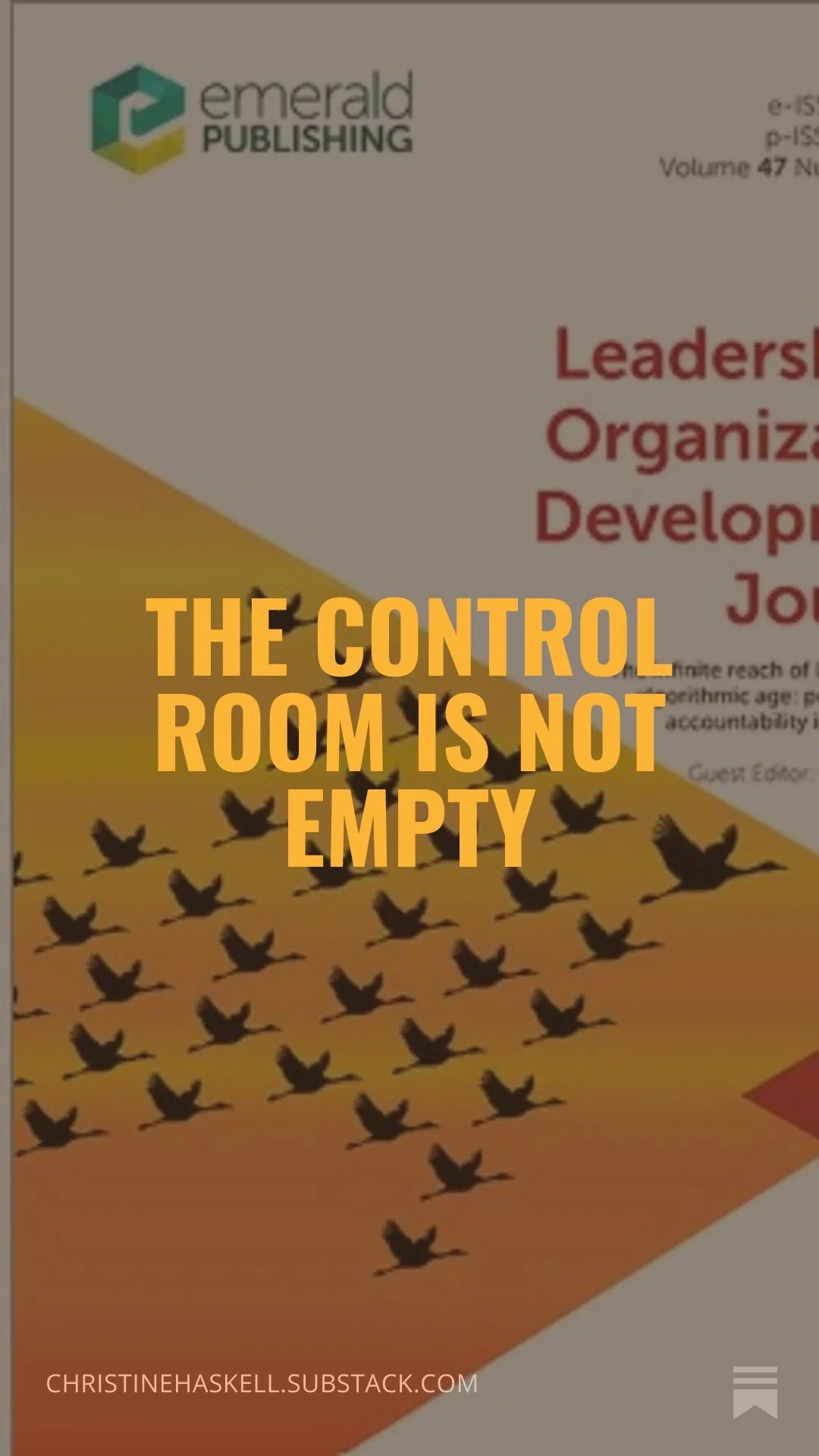
The Control Room Is Not Empty
AI governance is not abstract. It shows up in the résumé that never reaches a human being, the school platform that no one can explain, the benefits form that rejects someone without a conversation, and the score that quietly narrows the options available.
My guest editorial for Leadership & Organization Development Journal is now out: “The Architecture of Accountability: Algorithmic Autonomy and the Discipline of Stewardship.”
The core argument is simple:
Leaders are not outside the systems they authorize.
When institutions fund, scale, and benefit from AI systems, complexity cannot become an alibi when harm appears.
The control room is not empty.

When Religious Conversion Becomes a Signal
JD Vance’s Catholic conversion sounds like a small demographic footnote: according to Pew, converts to Catholicism account for just 1.5% of U.S. adults.
But small groups can carry large signals.
Catholic converts attend Mass at higher rates than cradle Catholics, are more likely to lean Republican, and are choosing the church at a time when Catholicism is losing far more inherited members than it gains.
That makes this more than a religion story. It is a story about chosen identity, institutional longing, and the strange American habit of treating affiliation as evidence of seriousness.
A conversion can be sincere and still socially useful. It can be spiritually meaningful and still signal order, hierarchy, discipline, belonging, and relief from the exhausting buffet of modern identity.
As a German-born cradle Lutheran who later went to Catholic school, I come by my guilt honestly—and then, apparently, sought continuing education.
So the deeper question is not simply why people convert.
It is whether our affiliations are deepening conscience, or teaching us to accept smaller humiliations in exchange for a better seat at the table.