

AI as a Period Movie set
Period films taught us to notice the fine grain of class and constraint. Who opens the doors, who carries the trays, whose feelings must be swallowed so that another character’s moral awakening can unfold in peace. The AI products that now saturate daily life are built on a similarly stratified stage, where some workers appear in the credits (engineers, founders) and others remain offscreen (moderators, annotators, ghostwriters, and translators) despite being essential to the performance.

Stewardship for the 99%: A Manifesto
These are not merely two different keynote styles: they’re two power structures fighting over the terms of AI use and stewardship. Used here as illustrations of common narratives, the argument concerns systems and incentives, not individuals. On one side, Big Tech scale-first camp (and its admirers) treats AI as the engine of extraction-led growth. Progress in this narrative means shipping models fast, pushing telemetry into every role, and celebrating access to the same tools that, in the next breath, are used to justify head-count cuts, normalize surveillance as productivity, saturate information spaces with synthetic media, and push energy and water costs onto the public. It is blitz-scale automation as civic virtue, asking people to be grateful that where managers once monitored, an automated, polished, and fluent dashboard now does the watching, scoring, and judging.
AI Is Not Just A Tool
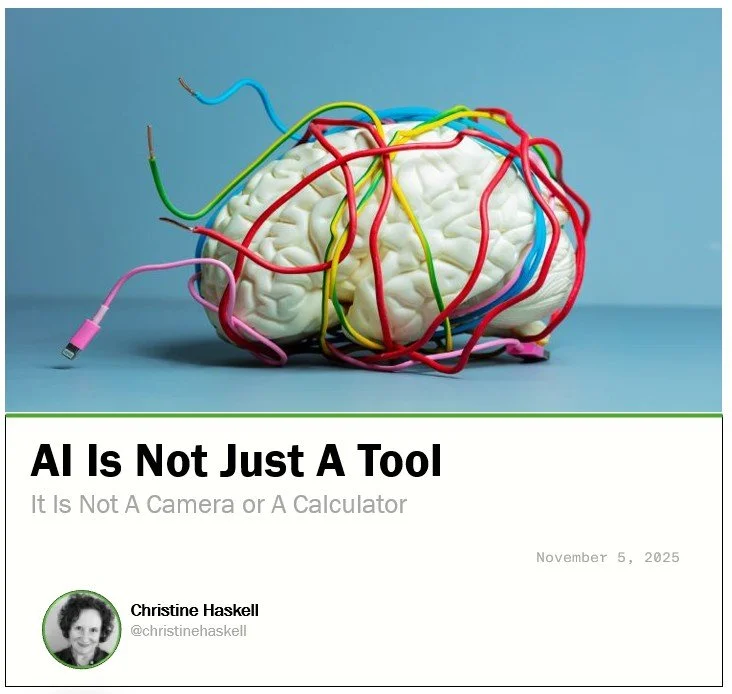
At every conference, someone reaches for the tranquilizer line: “AI is just a tool—like a camera.” It sounds sensible because cameras calmed us once: art didn’t die; it changed. But cameras point at the world and capture what’s there. Modern AI points at us and proposes what comes next—labels, scores, sentences that other systems treat as facts.

Built to Hold, Not Hype
Generally speaking, Seattle is where you build the system that can’t fail; SF is where you decide to change the rules. Combine those instincts and you get companies that both ship boldly and stand up to reality.
Seattle’s startup scene is a BigCo-shaped ecosystem. The center of gravity is Amazon/Microsoft/Starbucks training, not YC-style blitzscaling. That produces world-class operators and systems thinkers, but fewer “set the rules, break the market” founders. The “break the market” bit is starting to wear thin with many (but that is another article). Founders and recruiters I know describe SF talent as more default-entrepreneurial; Seattle talent as more “show me how to get started.” Recent founder roundtables echo this: SF tolerates wilder bets and higher risk; Seattle is supportive, “chill,” and a bit less urgent.

When Defaults Decide
The show’s craft is a lesson in governance: a single camera that never cuts—like a business model built for uninterrupted engagement. In that world, safety is an interruption. When adults outsource judgment to platform defaults, harm isn’t exceptional; it’s ambient.

Skipping Bloom Is Dorian Gray in Academic Drag
At a recent leader conference, an instructor bragged that AI lets students “jump the first two bands of Bloom” and skip group dynamics to “get more done.” The room didn’t nod; it shifted. What’s marketed as efficiency is the quiet deletion of maintenance—the slow, social work that makes leadership possible.

The Dorm Room Is Still Open
Your policy window is narrowing.
FaceMash wasn’t a prank; it was a prototype—rating women like trading cards. I even watched an MSDN colleague rank dates in an Excel “marriageable” index at work; the eye-roll response from executives was governance by shrug.

Belonging Isn't Enough
Belonging is easy to manufacture—rituals, slogans, smiles that signal harmony. It reassures, but doesn’t guarantee substance. Mattering is harder to recognize. It often begins in discomfort, when a contribution unsettles what people would rather leave undisturbed. In classrooms, consulting, and workshops, I’ve seen the same pattern: meaningful work rarely begins with ease. It begins with the risk of being misunderstood.

If They Shine, You Shine
Kamala Harris, reflecting on her early days as Vice President, wrote:
“Their thinking was zero-sum: If she’s shining, he’s dimmed… None of them grasped that if I did well, he did well.”
That line captures a pattern I’ve seen across industries. Leaders invite younger colleagues into the room—fresh energy, sharper skills, new perspectives. They call it collaboration.
But when that talent delivers, the dynamic shifts. Clarity, competence, or courage show up, and suddenly the “invitation” curdles into rivalry. The person meant to validate a leader’s judgment gets recast as a rival. What follows is predictable: withdrawal, sabotage, self-preservation over stewardship.