
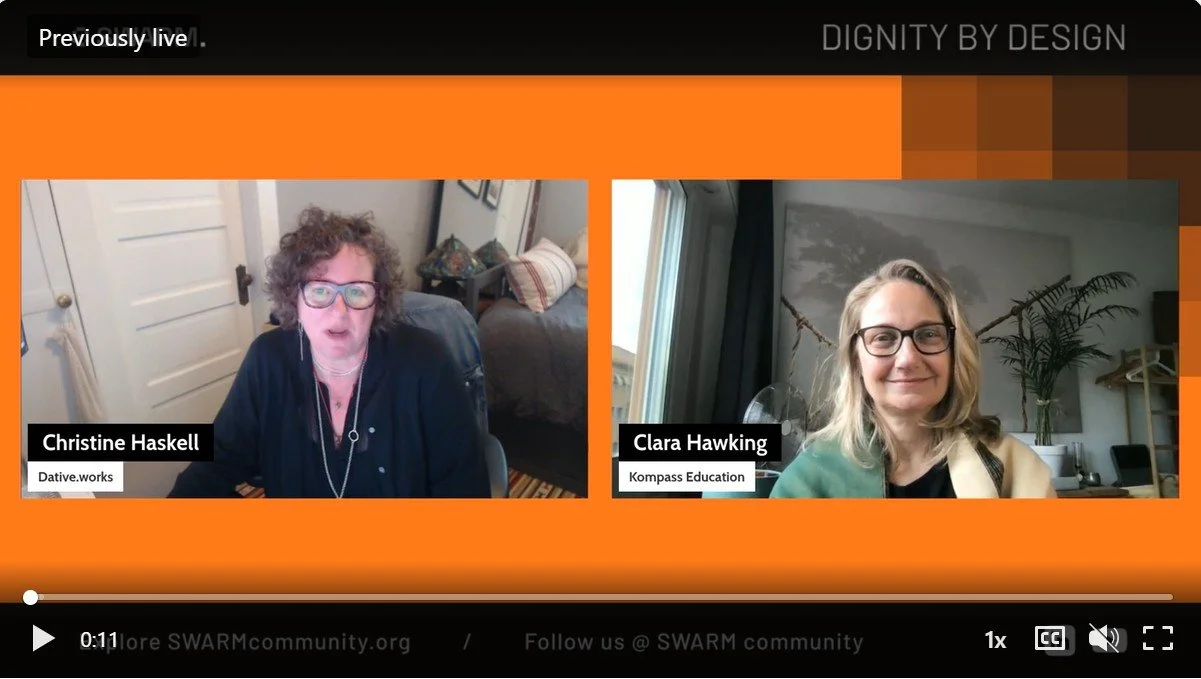
Dignity By Design: Ep. 1 with Clara Hawking
The real topic isn’t AI. It’s institutional metabolism.
Every organization has a way of converting people into throughput. Some do it politely, with performance reviews and dashboards. Others do it with cages and deportation paperwork. The forms vary; the function is remarkably consistent: the system keeps moving by offloading its friction onto someone else’s body, time, reputation, or future.
AI accelerates that metabolism. It expands the system’s ability to act at scale without direct contact, and therefore without direct accountability. When the harm comes, it arrives as a paperwork artifact: a “match,” a “risk score,” a “process.”
The reason her essay lingers with people, one participant mentioned it “haunted” her, is that modern harm is rarely theatrical. It’s administrative. It’s denial wrapped in procedure. It’s violence in the language of efficiency.
No Harm Intended
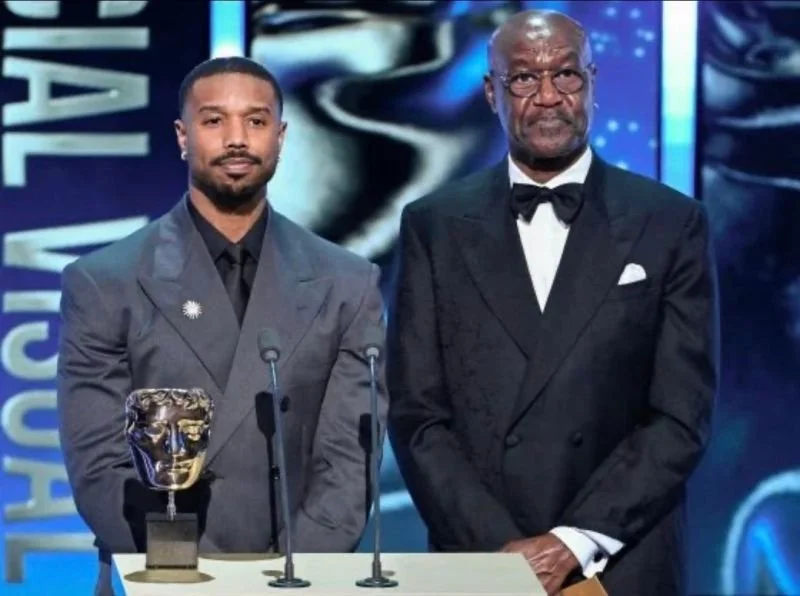
The awards ceremony wasn’t broadcast live. The BBC aired it with a two-hour delay, meaning this was not an unfiltered moment that simply “happened” to viewers. It was an edited broadcast. Edited broadcasts are not neutral; they reflect human judgment, priorities, and power. Both the original and the aired version had "inappropriate shoutouts.” Producers cut Akinola Davies Jr., saying “Free Palestine,” making it unmistakably clear that editorial intervention was underway. Choices were made. Among those choices, the N-word shouted at two Black actors remained. That is not neutrality. That is a decision, and decisions like that deserve scrutiny.
Was it malice or incompetence?