
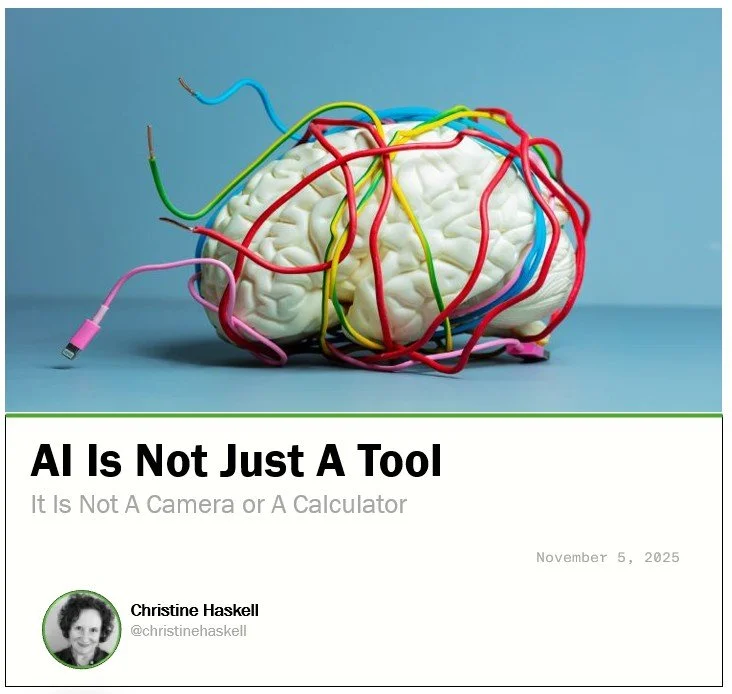
AI Is Not Just A Tool
At every conference, someone reaches for the tranquilizer line: “AI is just a tool—like a camera.” It sounds sensible because cameras calmed us once: art didn’t die; it changed. But cameras point at the world and capture what’s there. Modern AI points at us and proposes what comes next—labels, scores, sentences that other systems treat as facts.

Built to Hold, Not Hype
Generally speaking, Seattle is where you build the system that can’t fail; SF is where you decide to change the rules. Combine those instincts and you get companies that both ship boldly and stand up to reality.
Seattle’s startup scene is a BigCo-shaped ecosystem. The center of gravity is Amazon/Microsoft/Starbucks training, not YC-style blitzscaling. That produces world-class operators and systems thinkers, but fewer “set the rules, break the market” founders. The “break the market” bit is starting to wear thin with many (but that is another article). Founders and recruiters I know describe SF talent as more default-entrepreneurial; Seattle talent as more “show me how to get started.” Recent founder roundtables echo this: SF tolerates wilder bets and higher risk; Seattle is supportive, “chill,” and a bit less urgent.

When Defaults Decide
The show’s craft is a lesson in governance: a single camera that never cuts—like a business model built for uninterrupted engagement. In that world, safety is an interruption. When adults outsource judgment to platform defaults, harm isn’t exceptional; it’s ambient.

Skipping Bloom Is Dorian Gray in Academic Drag
At a recent leader conference, an instructor bragged that AI lets students “jump the first two bands of Bloom” and skip group dynamics to “get more done.” The room didn’t nod; it shifted. What’s marketed as efficiency is the quiet deletion of maintenance—the slow, social work that makes leadership possible.

The Dorm Room Is Still Open
Your policy window is narrowing.
FaceMash wasn’t a prank; it was a prototype—rating women like trading cards. I even watched an MSDN colleague rank dates in an Excel “marriageable” index at work; the eye-roll response from executives was governance by shrug.

Belonging Isn't Enough
Belonging is easy to manufacture—rituals, slogans, smiles that signal harmony. It reassures, but doesn’t guarantee substance. Mattering is harder to recognize. It often begins in discomfort, when a contribution unsettles what people would rather leave undisturbed. In classrooms, consulting, and workshops, I’ve seen the same pattern: meaningful work rarely begins with ease. It begins with the risk of being misunderstood.

If They Shine, You Shine
Kamala Harris, reflecting on her early days as Vice President, wrote:
“Their thinking was zero-sum: If she’s shining, he’s dimmed… None of them grasped that if I did well, he did well.”
That line captures a pattern I’ve seen across industries. Leaders invite younger colleagues into the room—fresh energy, sharper skills, new perspectives. They call it collaboration.
But when that talent delivers, the dynamic shifts. Clarity, competence, or courage show up, and suddenly the “invitation” curdles into rivalry. The person meant to validate a leader’s judgment gets recast as a rival. What follows is predictable: withdrawal, sabotage, self-preservation over stewardship.
AI, Adaptability, and the Stories We Tell Ourselves
Artificial Intelligence (AI) is rapidly changing how we work, make decisions, and define success. But when AI or any new technology suggests something unexpected, how do you react? The answer is shaped more by your experiences than the technology itself and more to do with your Data Biography — the sum of your experiences, reactions, and assumptions about data that shape how you engage with new innovations. By understanding your data biography, you can improve your adaptability, enhance decision-making, and ensure you control new technologies — rather than letting them control you.

AI, Marriage, and the Systems We Build: Why We Shouldn’t Be Surprised By High Failure Rates
What do AI investments and marriage have in common? A lot more than you'd think.
Recently, while walking past Las Vegas wedding chapels, I was struck by how we’re encouraged to leap into marriage—despite a 76% chance of it leading to dissatisfaction or divorce. If that were your odds of getting hit by a bowling ball, you’d wear a helmet, right?
Yet, we treat AI investments the same way: chasing transformation, pouring money into the latest technology, and ignoring the evidence that most implementations fail. Some studies suggest that over 80% of AI projects never reach deployment or meaningful ROI—but companies keep making the same mistakes.
The real issue? The systems we build produce the results we deserve. Just as societal expectations drive people toward marriage, hype, pressure, and poor planning drive businesses into AI investments that are doomed from the start.
So what if we designed AI strategies with the same scrutiny we should apply to marriage? The results might surprise you.
Read more here: [Insert article link]
#AI #DigitalTransformation #Leadership #Strategy #SystemsThinking #DataDriven