

Machine, My Coworker
We often consider digital technologies like data platforms, AI, and copilot features as tools. But if we're rethinking the future of work and the future of careers and companies, it's helpful to think of these things as augmenting our efforts. For a copilot in particular, it becomes a junior coworker or maybe a more senior co-worker as the AI skills get better.

Data Projects: Tips and Challenges
As we continue to drive data projects, familiar challenges begin to present themselves. By observing, we can become better diagnosticians of systemic issues. Learn what to avoid and how to navigate them better.

Countdown: Book Excerpt Chapter 4
People who work in data management are particularly dedicated problem solvers. They are committed to the mission in a way that makes them want to make the initiative successful. Most examples featured in the book reflect what happens in a specific type of data project -- a team-based project with stakeholders recruited from across the organization, including outside partnerships.

Resistance mitigation strategies
Change management wouldn’t be so hard if it weren’t for…the people. Open issues or objections left unresolved today cost time down the road. Suppose work starts before these concerns are mitigated. Stakeholders might get frustrated or begin to hold back their participation. Work produced might have difficulty getting implemented. Buy-in realizes impact.

Countdown: Book Excerpt Chapter 3
Until an organization is willing to invest in its data capabilities, aligning data resources to answer complex business questions will be like riding a bicycle to chase a Formula One racer and never catching up. Scoping project opportunities well is about building enough trust to eventually scale resources. While a single project manager can accomplish some initiatives, most data projects require multi-disciplinary resources to execute.
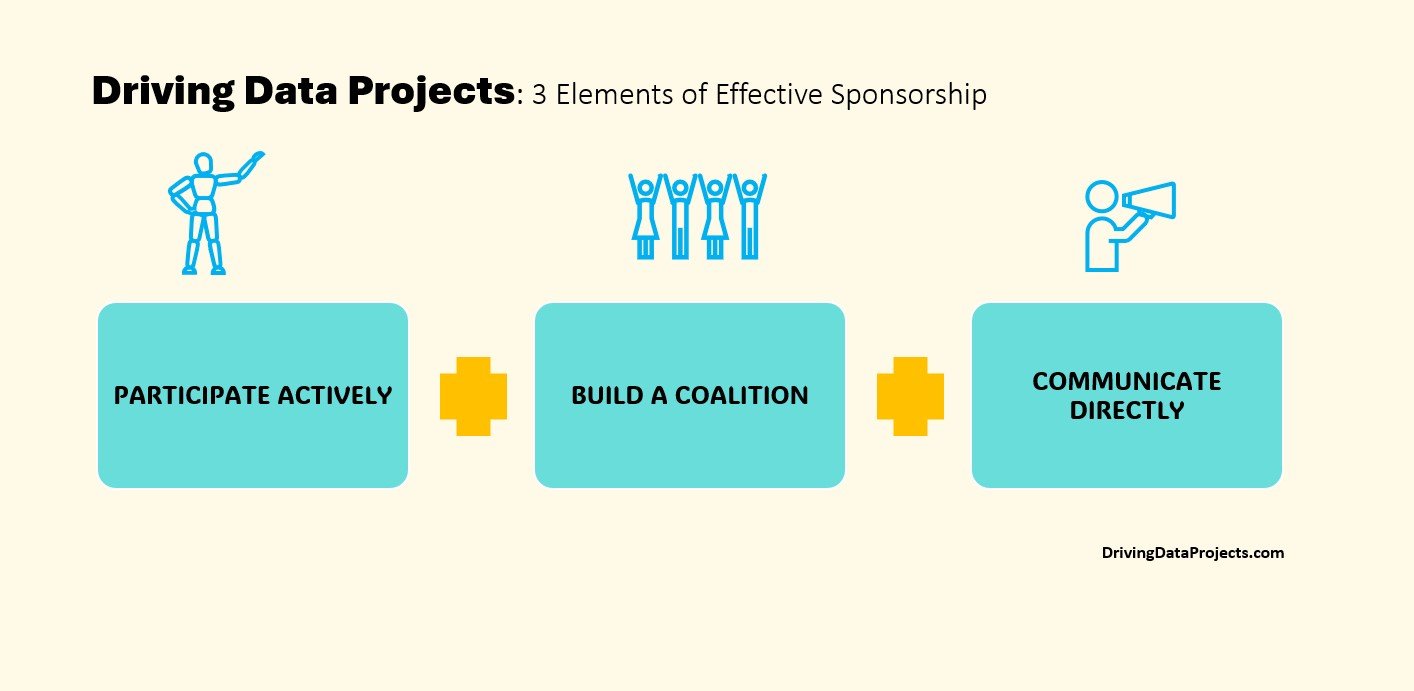
3 elements of effective sponsorship
A popular misconception of senior leadership is that effective executive sponsorship is a clearly understood skill. Many assume executives receive developmental feedback about becoming effective sponsors. Sadly, there is little training on sponsorship from middle management on up.
Leaders often accept sponsorship of an activity, not knowing what it entails. Some think it means sending a few enthusiastic emails about an initiative, propping up delegates in meetings, and moving on to the next thing. Some organizational cultures tolerate those actions as enough.

Countdown: Book Excerpt Chapter 2
Book Excerpt: While a fully funded budget that supports data as a service is an integral part of a data transformation’s financial picture, few are fully staffed or funded. Three-quarters of executives confirm their organization now has some form of data strategy (however rudimentary), but a paltry 16% say they have the skills and capabilities necessary to deliver it.[1] Even though the average staffing budget is growing yearly, finding the skills and capabilities to execute data projects is becoming harder and harder.

Countdown: Book Excerpt Chapter 1
Book Excerpt: Data has traditionally been managed by a combination of information technology (IT), Operations, and Finance. Over the last ten to fifteen years, the chief data officer (CDO) role has come onto the executive scene. While not yet a universal title, the role of the CDO started by reporting through these functions and is beginning to be considered separate.
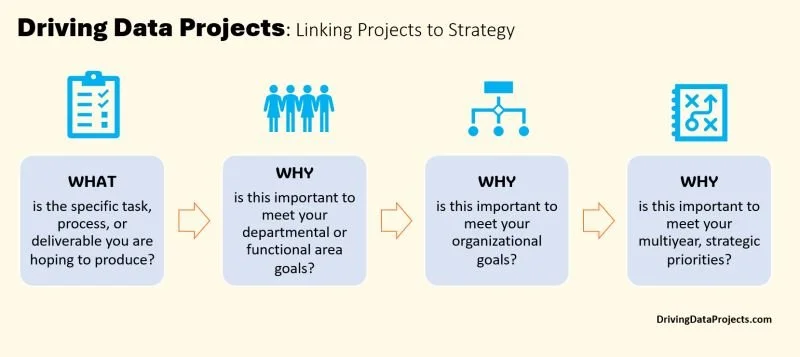
Linking projects to strategy
It can be challenging when stakeholders cannot translate business questions into technical requirements or do not provide enough context for data teams to do so. From there, the data team is often left to maintain the status of a series of ad hoc projects rather than connect these business questions to a larger more defined data strategy.